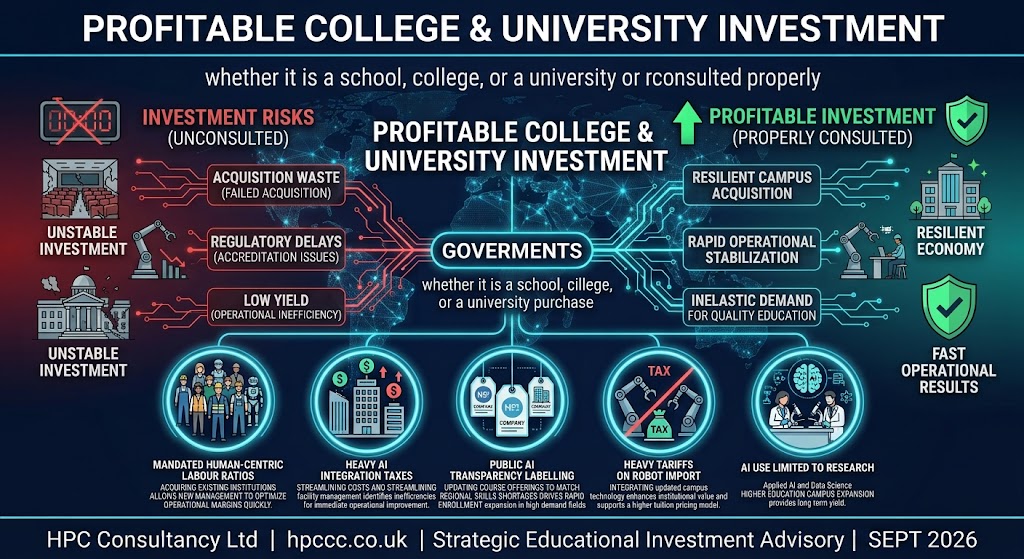
Investing in educational infrastructure, whether acquiring a primary school, a vocational college, or a higher education campus, represents one of the most structurally resilient capital allocation strategies available to institutional investors. Demand for quality Ghana education remains inelastic across economic cycles, providing reliable yields and long term asset appreciation. However, realizing both fast operational stabilization and high profit margins depends entirely on rigorous pre-acquisition strategy, proper campus positioning, and expert advisory.
When structured with clear operational guidance and precise local market alignment, educational assets perform as high-yield real estate and operational businesses combined.
The Strategic Value of Educational Asset Acquisition
Educational acquisitions provide unique structural advantages that differentiate them from conventional commercial real estate investments.
Assets generate revenue through both core tuition fees and auxiliary services, including campus accommodation, specialized training facilities, and corporate partnership programs.
Existing institutions come with established student bases, regulatory accreditations, and brand equity, allowing new management to optimize operational margins quickly.
Physical campus assets retain substantial underlying property value in prime regional locations, ensuring strong downside protection.
Driving Rapid Returns Through Expert Advisory
The difference between an underperforming educational acquisition and a highly profitable investment comes down to proper consultation and execution. Without thorough due diligence and specialized campus strategy, investors risk regulatory delays, low occupancy rates, and misaligned course offerings.
Essential Elements for Acquisition Success
Navigating local accreditation frameworks, student visa compliance, and government quality standards ensures uninterrupted operational continuity post-purchase.
Identifying inefficiencies in facility management, administrative overheads, and staff allocation allows investors to streamline costs and improve operating margins immediately.
Updating course offerings to match regional skills shortages, particularly in high-demand fields like technology, data science, and applied learning, drives rapid enrollment expansion.
Integrating updated campus technology and flexible learning spaces enhances asset value and supports higher tuition pricing models.
Higher Education Expansion Case Study
A prime example of strategic educational planning is the Applied AI and Data Science higher education campus expansion project in Reading, United Kingdom. By combining specialized technical curriculum development with targeted infrastructure planning and financial modelling, the project establishes a scalable campus model designed for long term yield and rapid operational rollout.
Strategic Educational Investment Advisory
HPC Consultancy Ltd delivers end-to-end strategic guidance for institutional investors, family offices, and private equity firms acquiring or expanding educational infrastructure across global markets.