
Why Ghana Premium High-Yield Deals Never Hit Public Websites
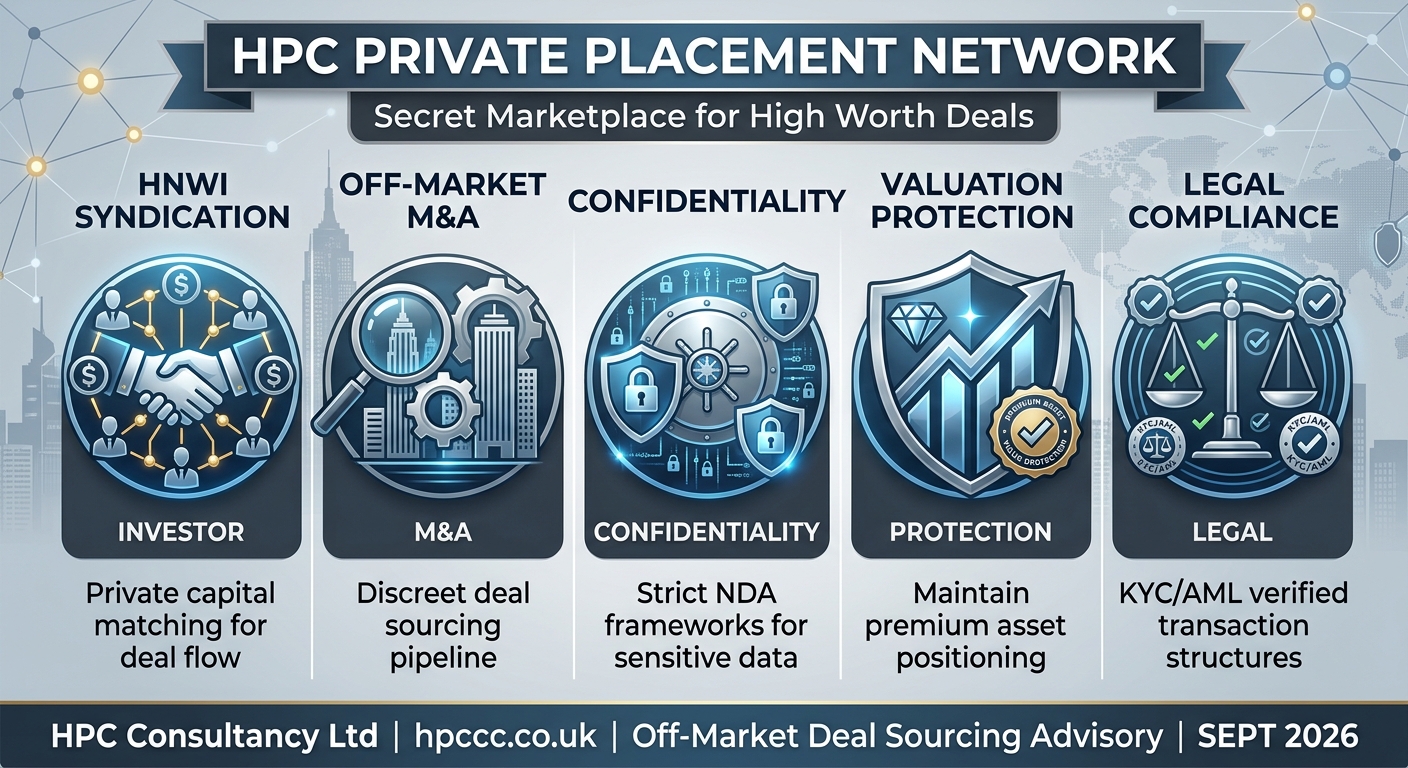
In the high-stakes world of institutional investment, cross-border M&A, and high-net-worth portfolio management, the most lucrative opportunities rarely appear on public websites or open listing portals. While low-tier assets, fractional retail investments, and mass-market broker listings flood public domains, high-value transactions operate exclusively behind closed doors.
Whether off-market data centre acquisitions, multi-million-pound commercial real estate portfolios, or strategic tech-driven sector rotations, top-tier deal flow relies on private networks and off-market mandates. Publicly listing a high-value deal creates unnecessary friction, risks asset value, and compromises corporate strategy.
1. Audience Irrelevance and High Cost Barriers
Mass-market Ghana digital channels target retail buyers, small-scale syndicates, and general public traffic. Ghana premium deals, which are typically valued in tens or hundreds of millions, require accredited institutional capital, family offices, and High-Net-Worth Individual (HNWI) syndicates capable of moving quickly.
-
Publishing multi-million-pound assets on open portals attracts unqualified inquiries, wasting valuable time and resources.
-
High-value transactions demand sophisticated deal structures, such as earn-outs, tax-optimised offshore licensing, and regulatory carve-outs, that general retail buyers simply cannot execute.
-
Public listing platforms charge fees or take visibility cuts without giving you direct access to genuine, decision-making capital networks.
2. Institutional Reputation and Brand Exposure Risks
Publicly listing a major asset or corporate entity broadcasts an operational pivot, distress, or restructuring to competitors, clients, and the media.
-
For an operating business, commercial property, or major asset, a public listing signals potential instability. This risks customer churn, key staff leaving, and supplier panic.
-
Institutional sellers and high-net-worth families prioritise discretion to protect brand equity and long-term market standing.
-
Exposing a deal too early can trigger counter-strategies from market rivals looking to undercut target valuations.
3. Asset Devaluation and the "Distressed Asset" Stigma
When high-ticket assets sit exposed on public websites, market perception shifts rapidly from a premium opportunity to stale inventory.
-
Prolonged exposure on public portals creates buyer suspicion about hidden liabilities, legal flaws, or unviable economics.
-
Open visibility invites aggressive low-ball offers, eroding baseline valuations.
-
Private, off-market placement preserves an aura of exclusivity, driving healthy competition among pre-screened institutional investors.
4. Leakage of Market Intelligence and Strategic Data
A public deal memorandum exposes confidential metrics, site specifications, supply chain dependencies, and technological IP to the general public.
-
Competitors gain actionable intelligence regarding real estate footprint, operational margins, energy capacity allocations, or software infrastructure.
-
Early disclosure of expansion or divestment strategies weakens your competitive advantage before the deal is finalized.
-
Off-market transactions safeguard proprietary business architecture and operational data behind strict Non-Disclosure Agreements (NDAs).
5. Preventing Operational Disruption and Hostile Interventions
Public listings invite external friction that can derail complex acquisitions before reaching heads of terms.
-
Unregulated public knowledge allows predatory competitors to intervene, contact landlords, pressure suppliers, or launch counter-bids aimed purely at disrupting the transaction.
-
Employees and key operational leads may panic or leave if an institutional asset deployment or corporate sale is leaked publicly without controlled internal communications.
-
Off-market private advisory ensures that operations remain uninterrupted while deal parameters are structured securely.
6. Regulatory, Legal, and Fiduciary Discretion
High-value cross-border transactions involve complex legal frameworks, tax jurisdictions, and compliance standards that public portals are unequipped to handle.
-
Off-market assets frequently involve bespoke structuring across multiple jurisdictions, such as mainland setup versus offshore entities, requiring careful legal alignment before any public disclosure.
-
Institutional sellers and asset managers have a fiduciary duty to secure maximum value through structured, competitive bidding rounds rather than open-market retail auctions.
-
Private placement protocols enforce rigorous Know Your Customer (KYC) and Anti-Money Laundering (AML) checks before disclosing sensitive asset parameters, protecting both buyer and seller.
The Role of Private Advisory for HNWI & Institutional Capital
High-net-worth investors and family offices do not use public search engines to find strategic deals; they leverage private advisory firms with established deal-sourcing pipelines. Private placement ensures discreet matching of qualified capital with high-yield opportunities, de-risking the acquisition process from start to finish.
-
Entity: HPC Consultancy Ltd
-
Core Focus: Off-Market M&A Deal Sourcing, High-Yield Capital Rotation, Sovereign Expansion Advisory, Private HNWI Syndication
-
Corporate Domain: www.hpccc.co.uk